|
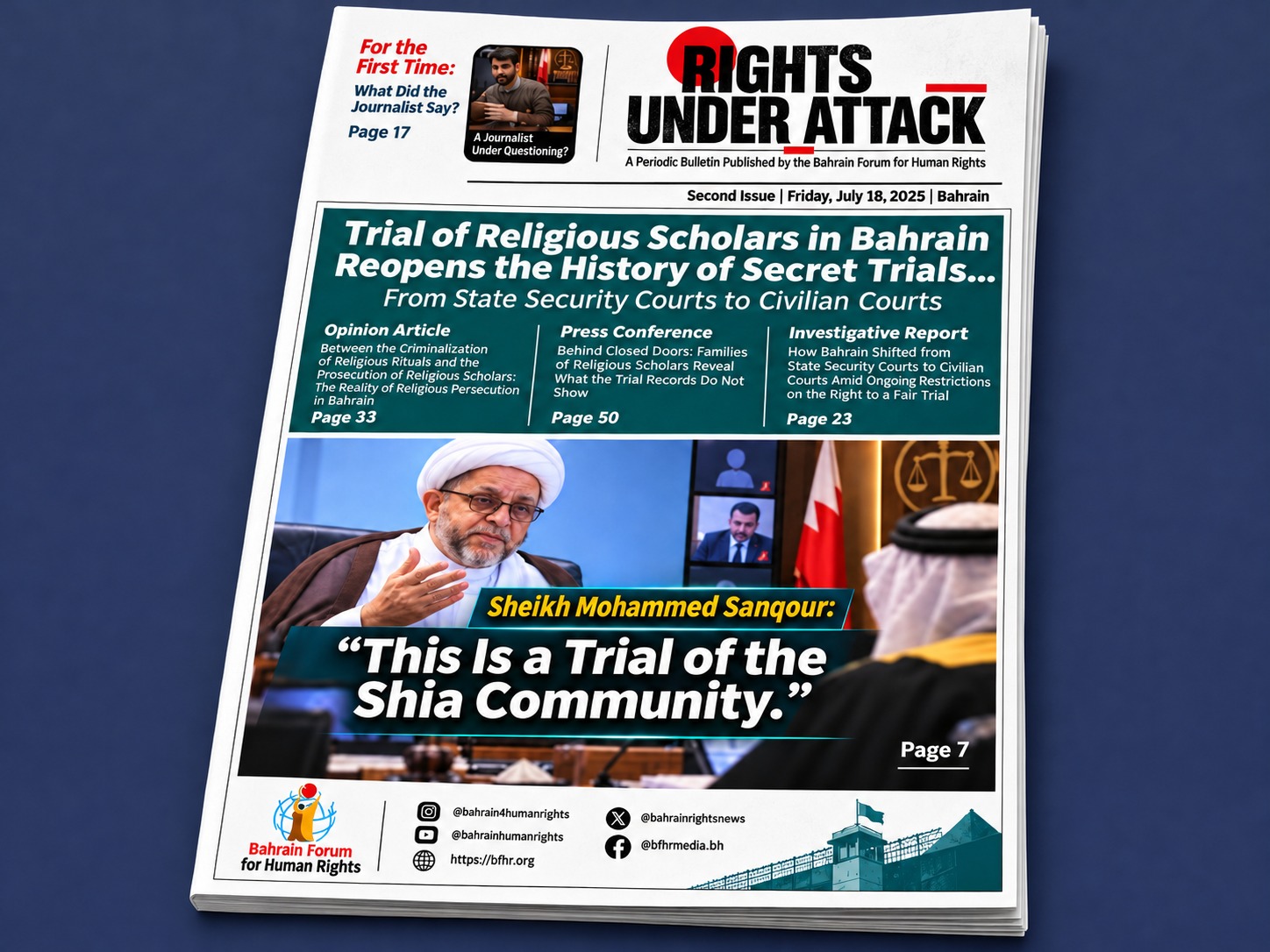
Bahrain Forum for Human Rights Releases Second Issue of “Rights Under Attack,” Highlighting the Trial of Religious Scholars and the History of Secret Trials in Bahrain
Read the full issue: Click here
The Bahrain Forum for Human Rights (BFHR) has published the second issue of its regular human rights bulletin, Rights Under Attack, for November 2026. The issue focuses on the trial of religious scholars in Bahrain. It includes testimonies of torture and coercion, alongside concerns over violations of fair trial guarantees. It also features investigative reports, analytical articles, and personal testimonies documenting various aspects of the country’s human rights situation.
The 60-page issue features a cover story titled “Trial of Religious Scholars in Bahrain Reopens the History of Secret Trials.” The report examines the legal proceedings involving religious scholars. It also addresses the serious questions these trials raise regarding judicial independence, defense rights, the accuracy of investigation records, and the effectiveness of accountability mechanisms.
The bulletin opens with an editorial titled “Who Is Putting Whom on Trial in Bahrain?” In it, the editorial board explores the human rights and political dimensions of the trial. The editorial argues that the case goes beyond the prosecution of specific individuals. Instead, it raises broader questions about the independence of religious institutions, freedom of belief, and the relationship between the state and Bahrain’s Shia community.
Investigative Reports Examine Torture and Accountability
The investigative section opens with “From Torture-Extracted Confessions to Statements Never Made.” The report examines Sheikh Mohammed Sanqour’s account of investigation records attributed to him. It raises questions about the accuracy of recorded statements and highlights allegations that signatures were obtained under coercion. It also revisits testimonies and human rights reports documenting torture and forced confessions in Bahrain over the past two decades.
Another report, “Who Investigates the Investigators?” examines the challenges of holding investigators accountable for alleged abuses during criminal investigations. Amid ongoing concerns about impunity, it considers whether oversight bodies are equipped to investigate complaints of torture. It also questions their ability to verify the accuracy of investigation records and confessions.
A third investigative report looks back at the history of secret trials in Bahrain, tracing such practices from the era of State Security Courts to the civilian judiciary. It further examines their implications for judicial safeguards and the right to a public and fair trial.
Human Rights Articles Explore Relations Between the State and Society
The issue also brings together articles and analysis by writers and human rights advocates addressing the wider implications of the trials:
• In “Religious Endowments and Politicization!” Sheikh Saeed Al-Madeh examines political interference in the affairs of religious institutions and endowments.
• In “What Comes After the Trial of Religious Scholars? The Future of Relations Between the State and the Shia Community in Bahrain,” Fouad Ibrahim considers how the trials may affect relations between the authorities and Bahrain’s Shia community.
• In “I Know What It Means to Be Tried for Your Views: From Ben Ali’s Prisons to the Trial of Bahrain’s Religious Scholars,” Zuhair Makhlouf draws on his own experience of being prosecuted for expressing an opinion, offering a comparative perspective.
• Human rights defender Ibtisam Al-Saegh focuses on the human cost of detention in “Behind Every Detainee, a Family Left Waiting: Testimonies from the Families of Religious Scholars in Bahrain.” Her article highlights the suffering of detainees’ families and the social and psychological toll of having loved ones imprisoned.
Families’ Testimonies and Concerns Over Religious Freedom
The bulletin covers a press conference titled “Behind Closed Doors: Families of Religious Scholars Reveal What the Trial Records Do Not Show.” During the event, relatives of detained religious scholars shared accounts of detention conditions and restrictions. They also detailed the humanitarian, health, and financial hardships faced by their families.
The issue also examines the arrests of Shia religious reciters and mourning hall officials, highlighting concerns over freedom of religious practice and the independence of religious institutions.
Another section addresses the revocation of citizenship, drawing on a joint human rights report. According to its findings, authorities stripped citizenship from 69 people, including 26 children. The report warns of the legal and humanitarian consequences of these measures, particularly their impact on the right to nationality and a sense of national belonging.
Documenting Violations and Keeping Victims’ Voices Heard
The second issue of Rights Under Attack is part of the Bahrain Forum for Human Rights’ ongoing efforts to document violations and amplify the experiences of victims and their families. It also aims to provide human rights and legal analysis on issues affecting fundamental freedoms in Bahrain.
The issue underscores the need for independent oversight of investigative procedures, respect for defense rights, and fair trial guarantees. It also calls for effective investigations into allegations of torture and coercion. These measures are critical to protecting detainees’ rights and ensuring justice for victims.
The bulletin concludes by stressing that documenting violations and sharing the testimonies of those affected are vital to the pursuit of truth and justice. Ultimately, a lack of accountability must not be allowed to silence victims or consign their cases to obscurity.
|