|

Between the Universal Declaration and Reality: Violated Rights and Repressive Policies
Statement by the BFHR on the International Human Rights Day On International Human Rights Day, the international community recalls the principles of the Universal Declaration of Human Rights as the foundational framework that guarantees human dignity and forms the cornerstone of any legal system that seeks to achieve justice and equality. On this occasion, the Bahrain Forum for Human Rights (BFHR) affirms that the Bahraini authorities continue to refrain from fulfilling their basic human rights obligations, despite their membership in the United Nations system and their ratification of several binding international conventions. The repressive practices and exclusionary policies carried out by the Bahraini authorities against their citizens – policies that contradict internationally recognized standards – have produced an increasingly strained reality regarding rights and freedoms in Bahrain, including: - Restricting freedom of opinion and expression through the state’s monopoly over media outlets, and the prosecution of activists, human rights defenders, journalists, and political dissidents for peacefully expressing their views, in violation of Articles 19 and 20 of the Universal Declaration of Human Rights.
- Undermining the right to a fair trial by relying on judicial procedures that lack transparency, and allegedly using confessions extracted under torture, contrary to Article 10 of the Universal Declaration and the standards of the International Covenant on Civil and Political Rights.
- Imposing restrictions on freedom of assembly and association through the dissolution of political societies, the prevention of the work of independent human rights organizations, and the banning or obstruction of peaceful gatherings and civil associations, in violation of Article 20 of the Universal Declaration.
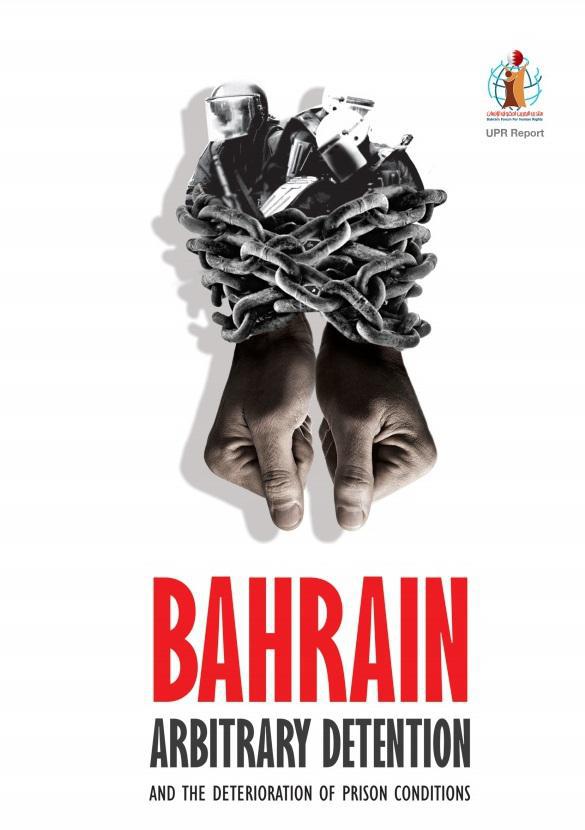
- Violations inside prisons and detention centers, including torture and ill-treatment, and the denial of adequate healthcare to a large number of detainees, which amounts to a breach of the right to physical integrity and humane treatment as stipulated in Article 5 of the Universal Declaration.
- Restricting the exercise of political rights through the adoption of political isolation in legislation and practice, in ways that limit fair and objective public participation, and impose constraints on political and civic work; undermining the principle of equality and non-discrimination enshrined in Article 7 of the Universal Declaration.
Respect for human rights is not a political option but a legal and moral obligation that cannot be fragmented or postponed. From this standpoint, the Government of Bahrain is required to: • Take serious and transparent steps toward harmonizing national legislation with its international obligations.
• Immediately and unconditionally release all prisoners of conscience, provide reparation, and end the policy of impunity.
• Guarantee the independence of the judiciary and prohibit any practices that may undermine its independence.
• Respect freedom of association, expression, peaceful assembly, and the formation of organizations.
• Establish effective channels of cooperation with United Nations mechanisms, including accepting visits by Special Rapporteurs and implementing their recommendations.
• Act on the recommendations contained in Bahrain’s Universal Periodic Review. On this day, we affirm that the promotion of human rights in Bahrain cannot be achieved except through genuine reforms based on transparency, accountability, and respect for the dignity of every individual, and through the comprehensive application of transitional justice measures. Human dignity and rights are non-negotiable, and fulfilling them is a fundamental condition for achieving security, stability, and sustainable development. |